Twisted Metal, the TV series
Posted by Rampant Coyote on May 1, 2023
Back in 1994, with the ink still dry on my degree in Computer Science, I got a job in the video games industry working for a new startup called SingleTrac. I was Employee #16. Most of the people there were engineers and artists from a simulation company called Evans & Sutherland. My salary was pathetic, and we were working on tables people had brought from home and cardboard boxes. I had to wait three days before my computer arrived (a hot new Pentium computer!). In the meantime, I filled out the paperwork and was introduced to the team, project, and the development station called “PSX” that was to be for an upcoming game console by Sony that not many people had heard of, let alone expected it to challenge the console titans of Sega and Nintendo. With all that complete, someone found me a working chair and handed me the design documents for a pair of video games codenamed “Firestorm” and “Red Mercury.”
“Firestorm” was previously called “Urban Assault” (I think we even had a poster in the hall with that title for years), but after a trademark and brand search, they were searching for a new name. The final title for the game was “Twisted Metal.” It was all about cars and guns and a little bit of magic. As a fan of the “Car Wars” analog game by Steve Jackson games, I was pretty thrilled to be working on it.
“Red Mercury” was eventually renamed “Warhawk” (subtitled “The Red Mercury Missions”), and I got to work on both titles at the same time. They had a ton of code in common between them as we frantically worked toward a release date matching the release of the original Sony Playstation console.
Well, fast forward to last week, when I saw the teaser for a live-action TV series called “Twisted Metal.” I’d heard a licensed TV series was in the works many months ago, but I had no idea if it would actually see the light of day. Apparently so.
So… from what I get, it looks like its set in an alternate history 1990s. CD players in cars, “Got Milk” bumper stickers, the music… Pretty much about the same time Twisted Metal and Twisted Metal II arrived on the market. That sounds like a cool choice.
I don’t know if Anthony Mackie is a geek. But he’s been a Marvel superhero in the MCU, and now he’s starring in a video game show… I begin to suspect he’s got a geek gene. 🙂 I hope he has fun with this.
For me, it’s kind of surreal seeing this old project that I lived and breathed for months all those years ago getting turned into a TV series. Will the show be any good? I have no idea, but the teaser looks pretty damn fun. I’m excited to watch it later this summer.
Filed Under: General - Comments: Comments are off for this article
Would “Sword Art Online” Be a Bad VR Game?
Posted by Rampant Coyote on November 7, 2022
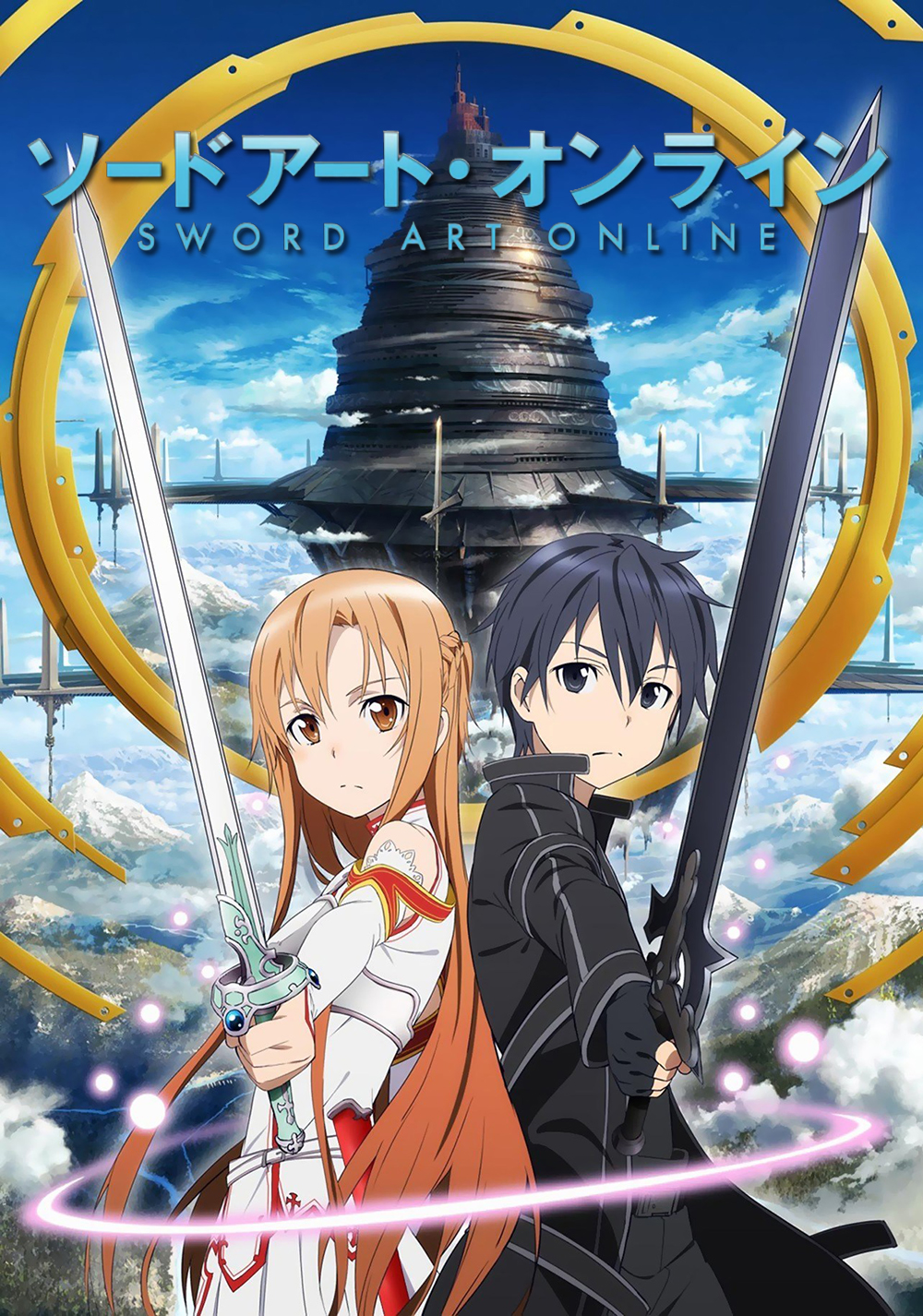 In the fiction, November 6, 2022 was the launch day for the game “Sword Art Online,” chronicled in the books, manga, and anime series of that name. In a launch day disaster that makes the Ford Edsel, New Coke, and the Microsoft Zune look like speed bumps in comparison, the players become trapped in VR and the headset will fry their brain if they die or if the headset is tampered with. Thanks to a crazy head engineer with a god complex, ten thousand players are now playing an ultra-realistic fantasy game in a virtual world with real-world stakes.
Now the real world date has caught up with the science fiction, as it always does. When the stories were first penned twenty years ago, I’m sure 2022 seemed a long way away, and Virtual Reality as we now enjoy it probably seemed almost as distant as the Matrix-like “Full Dive” experience the author described. The closest we had was a short-lived “Virtuality” arcade systems in the mid-to-late 1990s, with something like 5 frames per second with flat-shaded, untextured polygons. (Which gave me VR sickness back then, too…) Oh, and the disappointment of Nintendo’s “Virtual Boy.” But Massively Multiplayer Online RPGs were the hot new thing (EverQuest launched in 1999, and World of Warcraft was only on the horizon). So author Reki Kawahara drew on his familiarity with the games of the day and their systems to create what he thought would be a super-cool virtual reality game.
Once consumer VR hit in 2015, we discovered a lot about VR game design. A lot of what we learned was how the timeworn conventions and standard practices of 2D projection (“pancake”) gaming played with a game controller differed from the optimal VR experience. Now, those who have actually followed this blog for a long time know that I am a big fan of experimentation and don’t believe that just because something has become a convention means it is the “best.” We are a long way off from being able to say anything definitive about what is truly the “best” VR experience, and the technology continues to evolve and change. It could be that full-dive VR, if it ever happens, will have a whole new set of rules that will have little in common with the best we can do now.
Let’s say Sword Art Online did release today using current VR technology. Minus, of course, the “death game” element. Would it be a good VR game? Or a bad one? Let’s take a look at a few factors. Not all of these are VR specific, but I’ll focus on that.
High Stakes
Obviously, killing off your player base is not a plan for long-term success. But what about having high stakes? We have many games now with character permadeath (or as an option, often called “iron man” or “hardcore” mode). We’ve had MMORPGs with some pretty high “death penalties.” Higher stakes certainly raise the thrill of a game. But with the enhanced thrill of winning, so comes the increased frustration with losing. Higher stakes encourages a slower, more methodical, and more “grindy” experience. In general, a subset of gamers really enjoy these higher stakes (I often do), but it doesn’t have broad appeal. Most MMOs have reduced the “death penalty” to a minor inconvenience that doesn’t do much more than prevent players from brute-forcing combats with respawned characters.
Not much else is said about the death mechanic in the other game worlds of the series. In Alfheim Online, players would (originally) respawn back in their home city, which meant onerous travel back to the combat zones if they were not resurrected on time. In Gun Gale Online, it is a massively PvP environment, and the stakes (outside of tournaments) are unknown, but unlikely to be very high. In the spinoff series, one emotionally unstable character really wants to raise these stakes herself, planning suicide if she dies in a tournament.
Are higher stakes good or bad? It really depends. I think character permadeath (my watered-down version of Aincrad’s lethal stakes) is bad for building the community that you want in an MMO, though it can work great in smaller-scale multiplayer games. Below that… it really depends on how narrow and hardcore you want your audience to be. A lower death penalty retains more casual players. I’m leaving this one in the fuzzy neutral territory.
World Scope
Aincrad consisted of 100 hand-crafted levels of tremendous detail, down to the taste of individual foods that were largely unique across the dozens of eateries in each town (of which there were usually several on each floor). Each floor had its own theme and style. The first floor was 10km in diameter, and each subsequent floor was a little smaller. The first floor therefore had a radius of 5 km, which means its playable area was approximately 78.5 square kilometers. We also learn that there are some massive dungeons that appeared below the first level over time, although a certain guild tried to keep those to itself.
By comparison, Skyrim VR (a great if clunky port, especially with mods) has a total map size of about half that, at 37 square kilometers, about a quarter of which is unplayable “border.” Not including dungeons and expansion territory. I believe that Skyrim is a mix of hand-crafted and procedurally (or at least tools-generated) content, and it could be a pretty fair comparison. Anyway, bottom-line, we’re talking about 150-200 Skyrims of content for all of Aincrad. Which is kind of ridiculous to imagine (especially if every level was fully hand-crafted), especially when we assume that there is a larger library of objects with a higher level of interactivity than Skyrim offers (even modded in VR).
As an MMO, this would spread out the player base pretty badly – especially with only 10,000 players from the first day. This is true in the fiction, as most of the players remain in the starter town on the first floor, or in headquarters near the front-line levels, with a few finding residence scattered across several levels in the late game almost two years later. The first level was probably pretty packed the first month, but after the first several months a solo player like Kirito would be able to do a lot of free space to play solo.
In a traditional game, player movement speeds are exaggerated, in part to compensate for how much smaller things seem on a flat screen. Realistic speeds seem way too slow. However, in VR, this scale changes, and a kilometer actually feels like a kilometer. Especially if you are walking or running them on a treadmill.
While there are some negatives, I think overall players would love to see a VR world with this much scope. Most VR players, finding themselves with a mix of Half-Life: Alyx detail, BoneLab‘s free-form interactivity, and Skyrim’s scope, would never want to log out even if the button is available. This would be an absolute win (but a budgetary nightmare as a developer).
Level-Based Advancement
SAO is kind of inconsistent on how level impacts play. There are some episodes / stories that suggest it is paramount, and there are others that suggest that the player’s own skills, equipment, and meta-gaming can bridge a significant level-gap. In the later game Alfheim Online, level and skills were all but ignored, emphasizing player skill like a shooter or fighting game. Gun Gale Online seemed to take a hybrid approach, with players building up their stats over time to use better equipment.
In general, level-based gaming is great for small groups that can level together, and can act as a “gate” to higher-level content. For a community, it limits the ability of friends to play together. Many MMOs have taken some interesting approaches to get the best of both worlds. In the better VR games, player skill and direct interaction takes on a pretty big role, as it should. Without the character’s stats and growth, you just have an action game rather than an RPG. Without direct player action, you don’t have much of a game. When both work together, you get the reason why people play RPGs in the first place.
“Player skill” shouldn’t be limited to physical action and how you swing a sword or throw a knife, either. As illustrated in the stories, a deep knowledge of the game systems, world, and lore combined with logic and quick thinking should confer an advantage.
Sword Skills
In Aincrad, players could trigger a combo skill as in a fighting game, launching into an unstoppable sequence with often devastating results. In fighting games as in SAO, this has a downside of other players being able to detect and counter these sequences if they knew what they were doing, and the initiating player being unable to stop themselves. This leads to the downfall of Kirito at the end of the Aincrad story arc, and nearly results in Asuna’s death in the recent film Sword Art Online: Aria of a Starless Night.
In a console game, this is cool, because a skilled player can use a very limited interface of a gamepad and a few buttons to launch into some extremely cool moves that look cool and demonstrate mastery from a third-person perspective. In first-person VR, however, you ARE the avatar, and taking control of it away from the player is generally a no-no. At best, it breaks immersion and frustrates the player. Worse, it can cause VR sickness. This is likely a “Twinkie Denial Condition” for a VR MMO.
Cutscenes in an MMO?
In the Sword Art Online: Progressive novels, certain plotlines are punctuated by forced events which are effectively cutscene events. Regardless of the character’s stats or the player actions, triggering one of these events forces certain things to happen to the players and NPCs. This normally only happens in “safe” zones, but one of the books has a transition between locations. Since everything is supposed to happen in real-time, there’s no instantly teleporting to the target destination, and the characters are forced to wait through a long transition… (and, let’s just say Bad Things can happen during this transition when other players aren’t trapped by this unskippable scene…)
Even in the books, this is presented as a pretty terrible idea even without the deadliness of the game. It’s a bad idea outside of VR, too.
 Procedural Plot Generator
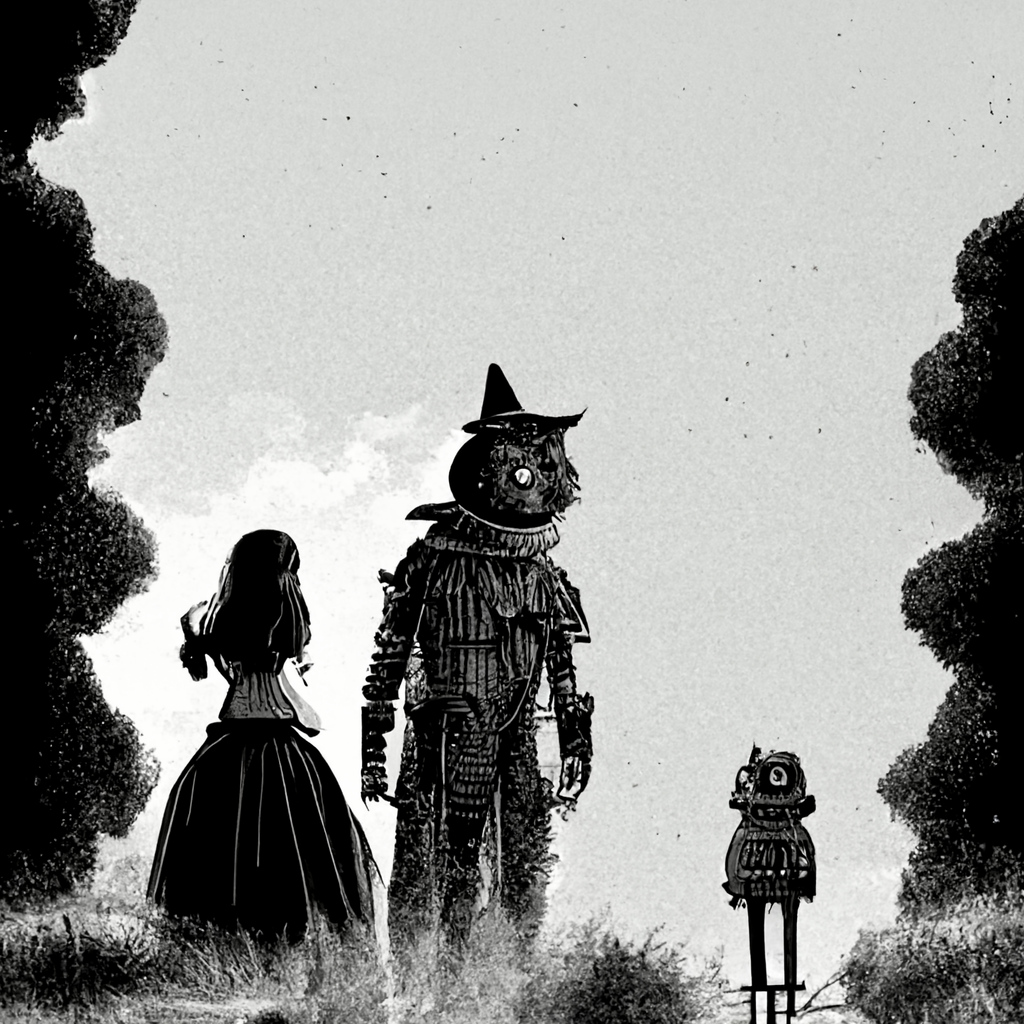
In the stories, the game system uses AI to generate storylines, NPCs, and rewards procedurally based on real-world literature, folklore, and mythology. Given what we’re seeing with AI-generated art, this technology doesn’t seem as far-fetched as it did five years ago. The results are often kind of bizarre, and can trap players or ruin the game geography (I’d call that a bug…). This meant the entire game could run on autopilot without designer input for a couple of years and still provide new and intriguing (if occasionally bizarre) content.
In theory, the tech is there to do that now. How would it play? As a supplement to hand-created plots and as an alternative to randomly generated fetch-quests, I think that would be a win in VR or pancake games. (The image to the left is AI procedurally generated art based on the Wizard of Oz…). Trapping players or destroying entire levels is probably a no-no and there would have to be failsafes in place to prevent that. But this is kind of a holy grail of game design for me, so I’d love to see it work.
Worldwide Gated Content
Until the “level boss” is defeated, nobody can proceed to the next level. It requires the entire community to work together to allow anyone at all access to more content. I like the concept in theory. It is great for a story. In practice, I think it would be a source of frustration. This is even hinted at by the books, especially when it took an entire month to find and defeat the first floor boss. Those late to the party are forever denied the chance to take on the “real” boss. While I don’t think this is a full-on “Twinkie denial condition,” I think it’s generally a bad idea to have player experiences so heavily influenced by the actions of others.
Non-Private Data
Players have the ability to “peek” over another player’s shoulder at their UI when they have it up. That’s a pretty bad idea. I can see toggling visibility temporarily to validate information (especially when it comes to trades and so forth), but in general these things need to be plainly visible to all, invisible, or selectable by the player. People shouldn’t be able to sneak peeks in their VR headsets while another player isn’t paying attention.
Frauds / Scams / Exploits / Sleep PK / etc.
The SAO stories are at their best when the characters are playing detectives investigating how certain loopholes / scams / exploits in an otherwise robust and literally lethal game system might be taking place. They make for great plot elements in the stories. Obviously, these are intended to be flaws in the game system, and not something a real-world SAO would seek to emulate.
Overuse of Menus / Abstracted Interactions
VR is at its best when the interactions are natural, and feel just like doing a thing in “real life.” In SAO, a lot of the interactions are done by tapping objects and bringing up menus, or simply tapping them. This is an artifact of console games with more limited controls. Even with current technology and the limitations of hand and body tracking, this is unnecessary except with more complex interactions. In general, interactions with objects can and should be a lot more natural, with very few menus. You don’t tap the cream and tap the bread to put cream on it… you pick up the cream and pour it on the bread. While this isn’t a big negative, this would be an unnecessary break in immersion.
Limited Fast-Movement Options
Aside from the one teleport gate in the main city in each level, teleportation or any kind of fast-travel is cost-prohibitive in Aincrad. In general, teleport crystals are so expensive that they are only used in an emergency or to facilitate a major raid. It sounds great for realism, and it can be a lot of fun when you are first exploring, but it quickly becomes tedious. Especially with realistic movement speeds in VR. It’s even worse in an MMO when you want the community to be able to play together, but friends may have to take hours to meet up.
Knockback
A lot of the enemy actions can toss players in the air. This is even worse than canned avatar actions, and can easily cause VR discomfort. If this is a required gameplay mechanic, a real-world SAO should allow comfort options to prevent them from witnessing their tumbling avatar in the first person. Otherwise, boss fights will be followed by vomit-fests from all but the most jaded VR players.
Aincrad for Modern VR
So where are we? If we were to literally create SAO for modern VR, should it look much like the game from the books, manga, and anime?
Yes and no. I think the idea of skill activation and canned animations are a bad idea, and getting rid of those–as they are described–might change the feel of the entire system. Maybe. Would diehard fans care? Probably not, especially if they had a reasonable substitute. I think that would be key. Sword skills might allow you to get better numbers if you perform them right, but you never lose control over your avatar.
Interactions should be made more natural than suggested by the books and shows, which would only enhance the experience. Obviously, the flaws and exploits should be avoided.
One of the challenges with VR, as in all MMOs, is maintaining framerate. A ton of PCs and dynamic items filling a scene not only makes it hard to move or interact, it can cause a VR player to become sick. This is a challenge current VR MMOs are tackling. I assume they are doing so successfully, as I’ve never noticed a significant problem in Zenith VR or Orbus VR. Maybe I am just lucky.
 And we are getting pretty lucky. We now have a handful of MMOs built from the ground up for VR, with a few more in development. Developers are tackling these kinds of issues, although their budgets are nowhere near what would be required to really build something of the scope and scale of Aincrad.
Ultimately, I believe that Sword Art Online gained its popularity as much for its concept and timing than its execution. VR has long promised the ability to visit other worlds in our lifetime. This concept has been visited many times before (I started with the Dream Park series, by Larry Niven and Steven Barnes), but SAO packaged it up at a time and in a format where we could almost see it happening. While “full-dive” technology to completely immerse us in VR is still a long way off, we’ve made a giant leap in this direction with modern VR, and I want to take advantage of it.
VR has changed the rules for me for computer RPGs as significantly as CRPGs changed things up from the dice & paper world. Playing an RPG in VR is something else, especially in those few titles that allow cooperative multiplayer. Something like Karnage Chronicles, which is more like a game of Gauntlet than a true RPG, is an absolute blast with friends. I’m still playing Skyrim VR, and it is pretty long-in-the-tooth both for the original version and the VR conversion.
We may never see a “true” VR MMORPG of the scope imagined by these authors. That’s fine. I’ll keep reading. But the next best thing is within our grasp, and I certainly hope to see our VR fantasy worlds grow bigger, better, and more interactive–and in some ways, even better than these science fiction stories promised. At least more fun as a game.
But with a logout button, of course.
Filed Under: Virtual Reality - Comments: Comments are off for this article
Persona 5. Finally.
Posted by Rampant Coyote on October 26, 2022
Apparently, I don’t buy game consoles unless I have written games for ’em. I’m a PC gamer at heart, still. So I never picked up a PS3 or PS4. There was really only one game I wanted for those machines… Persona 5. I had trouble justifying that kind of expense for a single game. Well, the expense, and the shelf space, as Mrs. Rampant Coyote regularly complains about these consoles I rarely play taking up space under the TVs.
When Persona 4 Golden launched on the PC–to surprisingly high sales, with a surprisingly good port–I thought it wouldn’t be long before we’d see a PC port. Maybe, technically, it wasn’t long, but it felt like a very long wait. In the meantime, the PC version of P4G felt superior in almost every way to the PS2 original. I continued to avoid spoilers, and I didn’t even play the PC release Persona 5 Strykers, which I understood to take place after the events of the original game. I bought it, of course. Showing support and all that.
My patience was finally awarded, 6.5 years after its initial release, as Persona 5 Royal came to the PC last week. Now I get to enjoy what is ancient news to everyone else.
Well, whatever. It’s not like retro-gaming (especially with RPGs) is anything new for me. 🙂 So far, the storyline seems a bit more forced than it was with P4, mainly with the contrived time limits. Granted, they are going for variety rather than Persona 4‘s “the next time it rains” forecast. And yeah, the game has hella more variety than the previous games, across the board. As usual, it always seems that there’s too much to do and never enough time to do it in… and when you do find time, the opportunities aren’t always available. A lot like real life, huh?
The Persona series (at least what I have played) has always represented the wild, hairbrained kind of inventiveness and weirdness that I felt was missing from mainstream western RPGs. Thankfully, the indies have brought a lot of that back, but Persona remains a cool, (relatively) big-budget breath of fresh air to the genre. So far, nitpicks aside, it’s exactly what I hoped it would be.
Now I just hope that if there is a Persona 6, it will enjoy a simultaneous release on PC as well as consoles. Good times.

Filed Under: Retro - Comments: Comments are off for this article
Childhood in a Box
Posted by Rampant Coyote on October 3, 2022
 It’s one thing to emulate classic videogames on PC. I’m still mainly a PC gamer (have been since I got my Commodore 64 as a kid…), and so my gaming PC is a bit of a beast, fully VR capable. It’s unsurprising that it’ll run my old console games from the 8, 16, and 32-bit eras without raising a sweat.
When I’m getting nostalgic or gaming with friends and family, there’s nothing quite like holding a game controller in your hand in front of a TV. I still have a few (too many, according to my wife) game consoles I’ve kept around for occasional use, and so I still have something that can still run games I helped create back in the “old days.” And… well… I still have an extensive library of sometimes painstakingly acquired discs and cartridges that I don’t want to part with. Even though running the older consoles on new TVs is quite a challenge.
Aaaanyway… to that end, I’ve also picked up a few emulators. We’ve owned a few with built-in licensed games, and some that have been more do-it-yourself. My latest acquisition is built around the Raspberry Pi 4. It has a form-factor of a tiny Playstation 1, which will probably always be my favorite console due to it being where I started my career. With an SD card capable of handling hundreds of CD-ROMs’ worth of games, it has a ton of potential. Rather than blow off the dust on my old Dreamcast and its library currently banished to the basement, I put some Dreamcast games on my tiny new acquisition. And… yes, they run just fine. That didn’t come as a surprise.
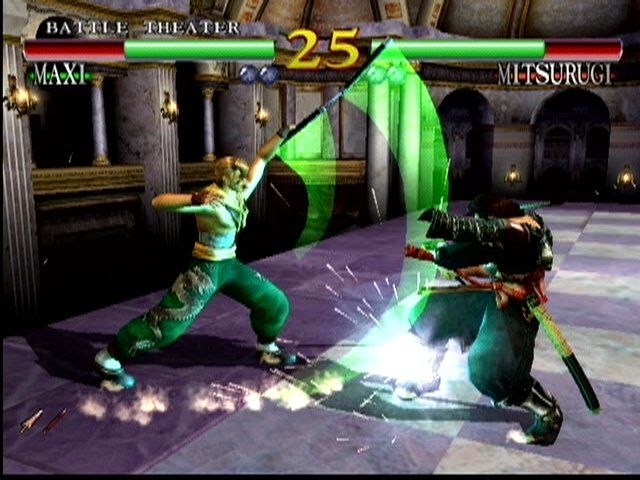
But that’s when the “old fart” part of my brain kicked in. I guess there’s some ingrained element there that still imagines these games as… well, definitely not cutting-edge, but not something that can be run on an all-in-one card that costs about as much as an off-brand XBox controller. I know that’s a weird me-thing, and after a couple more rounds of Soul Caliber it’ll be gone forever. I’ve long gotten used to automatic coffee makers getting hacked to run Doom. Tech marches on, thank goodness. Now not only can my childhood fit on a pocket-sized box, but a chunk of my adult life too!
Filed Under: Retro - Comments: Comments are off for this article
How VR changes how games are played
Posted by Rampant Coyote on September 26, 2022
 Yeah, a lot of my posts are VR-related these days. It’s how I roll, now. Not that all (or even most) of my gaming is in VR. I’m still retro-gaming regularly and I am really looking forward to the PC release of Persona 5 next month. But… VR is a wild and exciting frontier, and I’m still nowhere near jaded. While a lot of approaches and conventions have solidified for certain genres of games, there’s still nothing set in stone, especially as the tech keeps improving.
One of the things that still amuses me is how different VR gaming turned out to be from what I anticipated back in the 1990s when the first systems came out. I think most of us were expecting a Doom port to VR with fundamentally unchanged gameplay. And yes, I’ve played exactly that. It was at once extremely satisfying to play exactly what I had once hoped for, and yet a glaringly obvious example of how VR is a revolutionary entertainment platform that demands a new approach to game design.
Just last week, the long awaited Half-Life 2 VR Mod came out on Steam (it’s free!), which gives us a pretty major conversion of the venerable classic to VR. It is still in early access, but I believe the entire game is fully playable in VR now. With the hand controllers, it absolutely changes the gameplay, at least from how I (distantly) remember it. You can physically move objects with your hands, manually load your guns and use holster-like areas. It’s a brand new game… except for the the textures, which are now very obviously old-school since you can get a closer look at them than ever. There are still a lot of elements that could be / should be different if it was written for VR from the ground up, but HL2VRM demonstrates the depth of changes needed to convert a standard first-person shooter/adventure to a reasonable VR experience.
RPGs… well… Suffice to say that how an RPG “should” work in VR is more complicated of a question than it is for non-VR. The trend is to do what is happening with the FPS games, and make it more visceral. Less menus, more physically-based action. Unfortunately, this makes most VR RPGs converge on a straight-up action game design where character skill becomes little more than a modifier to some numbers or a toggle on what spells are available or what items can be equipped. I personally like more of a mix of character abilities + player abilities in my RPGs, but VR does demand a bit of a reevaluation of how that is supposed to work. We may have to borrow ideas from the LARPing (Live Action Role-Play) community as we go forward.
The somewhat more sensationally-titled video “How Virtual Reality is Changing Gaming Forever” by Virtual Insider also touches on the topic of the intensity of the VR experience. This is most notable in horror games, where the intensity inside a VR headset is several times higher than that of playing on a flat screen, even in a dark room. Fear is definitely more intense. I never thought the monsters in Minecraft were ever that big of a deal until I encountered them in VR, and they genuinely freaked me out. But fear isn’t the only feeling that intensifies. I think this applies to the sense of intimacy and shared experience in a multiplayer cooperative game, the sense of wonder in an RPG or when landing on a new planet in No Man’s Sky, and the fierceness of the competition in a PvP game.
I think flat-screen “pancake” games are not going anywhere anytime soon. I’m still playing them regularly, and there are many genres I just don’t see making a convenient leap to VR… at least not without just being played on a projected 2D screen. Making games that are playable in both VR and on a flat screen will be a challenge, and will inevitably be “best played” on one or the other. Regardless, these are exciting times to be a gamer.
Filed Under: Virtual Reality - Comments: Comments are off for this article
Cyberpunk 2077 in VR
Posted by Rampant Coyote on September 21, 2022
As a long-time fan of the dice-and-paper RPG for Cyberpunk, designed by Mike Pondsmith, I was absolutely thrilled to learn that CD Projekt Red was tacking that game universe. That was back in 2013 or something when they did this absolutely amazing concept video.
They nailed the “feel” of the game world… which of course borrowed liberally from genre stories by authors like William Gibson, Bruce Sterling, Walter Jon Williams, and George Alec Effinger. When the game finally released, I enjoyed it a great deal. While the consoles struggled and nobody denies that the game was released a bit earlier than “when it’s ready,” after a couple of emergency patches it was a pretty good experience. Meaning I no longer got trapped in an uncompletable quest or forced to restart when a “relic malfunction” would never quit. I guess I’m not one who thinks seeing a character go into a t-pose makes a game unplayable, but some people out there are more demanding than me.
The game world was pretty ridiculously detailed and fun to explore. That’s how I like it. No, I’d never want to live in the horrible dystopian nightmare of a setting, but it’s fun to play and explore. It makes for good drama.
Anyway… it turns out Luke Ross has made a mod for the game that makes it work in VR. There’s also a free one by VorpX, but the Luke Ross one is ten times better. Seriously. Or at least it is as of this weekend. Before that, my particular combination of headset and video card were not recognized by the mod. And now?
Well, let’s just say that those with a low tolerance for glitchiness need not apply. You also should not be afraid to tinker with your PCVR, and you should have at least a moderate tolerance for VR. If you are prone to VR sickness (like I was when I first started), this is NOT the experience for you.
It’s far from perfect. Got it? Okay.
 Beyond that… holy crap, it’s an amazing experience. Just walking along the streets of Night City, taking in all the incredible detail they jammed into this game, is incredible. This is the crap that was in my imagination back in the early 90s, tossing dice with my friends. Yeah, it was way cool in pancake mode when I first played it, but being there in VR is something else.
Gameplay-wise, it seems fully playable from start to finish, but there are clearly some rough spots. Since the game was never intended for VR, a lot of things just don’t translate well. Melee combat is weird. When you shoot, it feels like you are holding your gun on your lips, and pointing your nose at whatever you want to shoot. Ironically, the Braindance sequences–the high-end Virtual Reality of the Cyberpunk 2077 world–are one of the most uncomfortable parts to play in VR. I found myself closing my eyes a few times to avoid getting sick.
I really hope CD Projekt Red does a sequel to this game, and builds in native VR support. It’s unlikely… we VR fans are still a niche audience.
If you are interested, the mod is available to patreon members for Luke Ross. Fortunately, his VR mod works for several other games as well, and he’s constantly adding new ones. YMMV, as usual.
Filed Under: Virtual Reality - Comments: Comments are off for this article
New Book Release : Queen of Monsters
Posted by Rampant Coyote on July 27, 2022
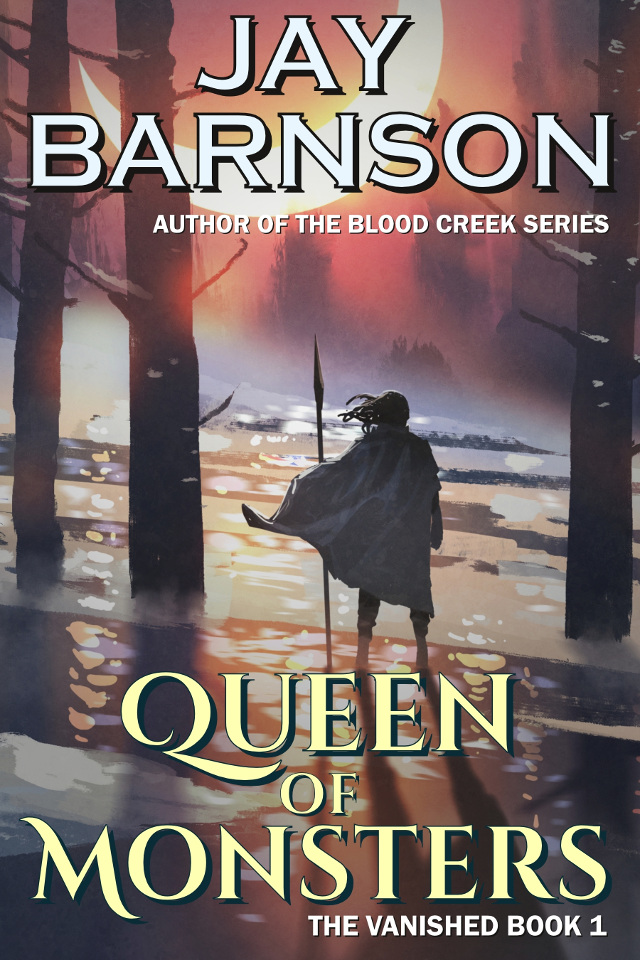 My newest book released this week: Queen of Monsters, the first in a new series called The Vanished. Book 2 should be out before the end of the year.
Queen of Monsters asks: What if some unexplained disappearances in our world–including some of the famous ones, like Amelia Earhart, Harold Holt, etc.–were because they were transported to another world? In a tradition as old as John Carter, what if said individuals were endowed with great power in this new world? How do the people in this fantasy world respond when they have learned to expect a trickle of powerful beings from another world?
As a teen, Aiden Holt studied stories of unexplained disappearances throughout history. He never dreamed he would become one of those disappearances.
Now trapped in an alien world, hunted for his non-functional “special abilities,” Aiden fights to survive against horrific creatures and determined enemies.
Somewhere between certain death and servitude, Aiden seeks an escape—if he can find other “vanished” who beat the odds and survived in this harsh magical world.
Technically, it’s “gameLit,” meaning it borrows elements from gaming. RPG fans should get a kick out of the magic system, but it’s not quite so heavy that non-gamers will be lost. There’s a subgenre called “litRPG” which goes even heavier into the stats and systems of gaming in their game world.
If you want to check it out, the eBook is available now on Amazon, and the paperback will be available soon.
Queen of Monsters: Book 1 of The Vanished
Enjoy!
Filed Under: Books, General - Comments: Comments are off for this article
VR: Where are the RPGs?
Posted by Rampant Coyote on July 13, 2022
We have a few VR games now inspired by Japanese anime styles, including an MMORPG. Role-playing games in VR are unfortunately less common than I would have expected, but not rare. We have choices. Many of them suck, but we have choices.
Several weeks ago, Virtual Dreamers has some discussion on the relative absence of JRPG-style games. His video poses more questions than answers, but it sparked some questions in my own mind. Since this video came out, one of the first JRPGs has come out for PC and Quest VR – RuinsMagus. I would love to tell you how it is, but it currently has a bug that prevents it from running on my machine. Hopefully that’ll be fixed this week. It is an indie offering, so like most things VR, it is the indies who are blazing the trail.
On the one hand, it’s weird thinking that JRPGs are under-represented, considering how common they are in flat-screen space. The existence of RPGMaker (in its various incarnations) has really pushed things in this respect. Once they made it possible to release commercial games with the tools, and especially once Steam opened the gates for RPGMaker titles, we became inundated with them. And yeah, 95% of them are crap. Sturgeon’s Law still holds. There’s still a TON of cool stuff in that top 5% though.
The simple answer to this is that we need is a “VR RPG Maker” — something a little more structured and easier to use than Unity plus some third-party assets and toolkits.
The problem with this simple answer is complicated, but it comes down to this: We don’t know what a JRPG in VR is supposed to look like, yet. Let me explain:
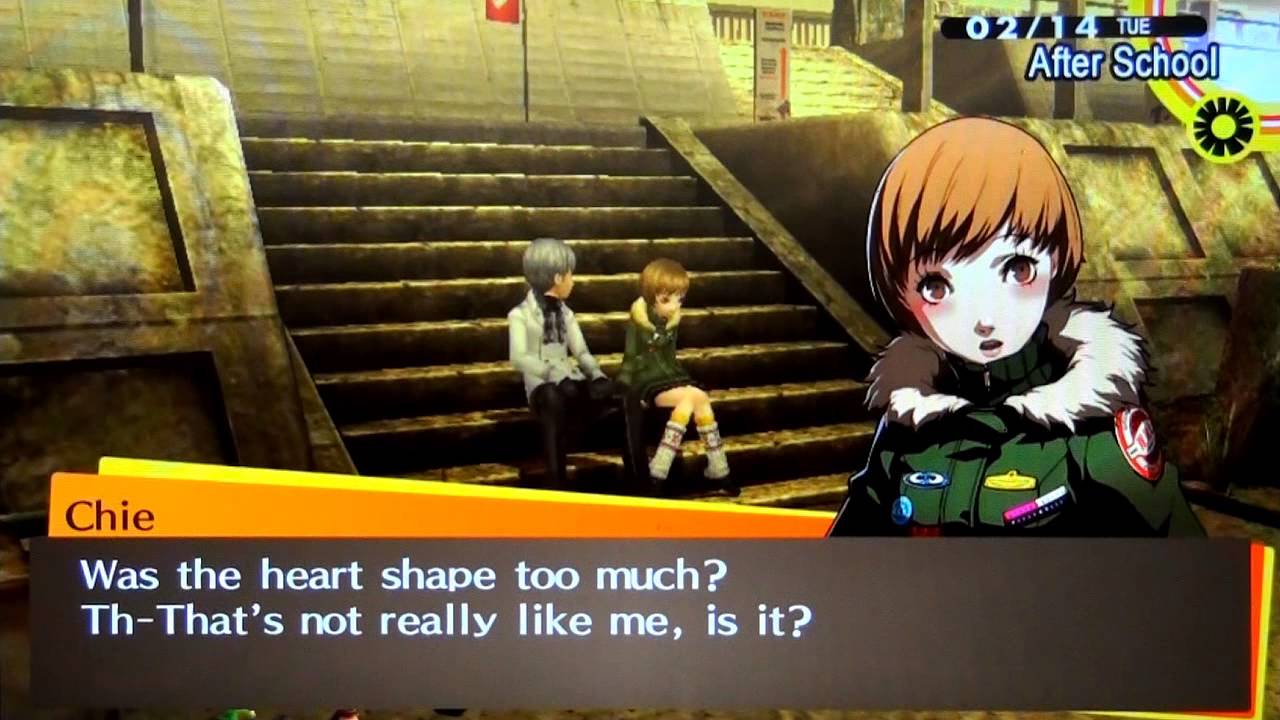 The definition of a JRPG “style” is already very loose. JRPGs became their own genre in part because of the conventions Japanese game developers followed. A few key games became popular, their conventions became roughly standardized, and then–as with RPGMaker– the console import market (and some PC games) were flooded with games that bore a lot of surface similarities. Western developers emulated the style, so the industry slapped the JRPG label on them and we called it a day. Today’s “JRPGs” – the higher-budget ones coming out of Japan – actually have a lot more in common with their mainstream Western cousins than the traditional 16-bit / 32-bit JRPG, in my humble opinion. Outside of art style, of course.
Virtual Reality is a whole new ballgame, even more than I naively expected six years ago. It’s not just a 3D game with 360 degrees of view. It changes everything, and while we’ve gotten a lot better at it now, there’s still a lot of “best practices” to figure out, and a lot of uncharted territory to explore. I’m not keen on adhering to convention for the sake of convention, but it doesn’t hurt to follow them if that’s not an area you are really trying to innovate in. Right now, we have some proto-conventions in RPGs evolving, but … they are still pretty rough.
In VR, the menu systems so popular in PC RPGs (and older console games) are not considered the best approach. VR mimics the real world and works best with physical analogs. You don’t just select an “Attack” option from the menu with a generic “Sword” object equipped. I mean, you can, but that’s a little like walking your bicycle. However, numerous VR games have chosen that just picking up swords, swinging them around, and trying to sheath it when you want to do something else is fraught with its own challenges. Players will wiggle their weightless two-handed swords with a single hand at ludicrous speeds, items will be dropped when you just wanted to move them from one hand to the other, inventory slots at your belt will be missed constantly, items will drop behind an inaccessible spot behind the merchant’s counter rather than being sold. The games have trouble interpreting the arcing flow of real-world movement into your intended actions.
The game that should make you feel like a badass adventurer in a fantasy world ends up making you feel like a mute klutz wearing oversized mittens.
Some of this is just the limitations of the technology. Or budget. That’s fine. We made awesome, compelling games back in the 16-bit era in spite of tech limitations. Games had much lower budgets back then, too. We did this through abstraction – generating the conventions that made things easier (or more user-friendly) to play given the limitations of the medium. We never demanded that the player walk by controlling each foot individually. And just because a player can, theoretically, control the precise arc of their blade doesn’t mean we have to be 100% literal about it in VR.
Some level of abstraction is necessary, even in the world of Virtual Reality, but we need to figure out what those should be. Somewhere between the clunky menuing of popular flat-screen games (If you have played Skyrim VR or Fallout 4 VR, you know of what I speak), and the clumsy but cool visceral physicality of Blade & Sorcery. The latter began as an RPG, I understand, but evolved into being more of a sandbox fighting simulator.
As we get more RPGs in this medium, categories will start forming around certain feels, flavors, and features. The three Fs. Some games will emulate the feel and flavor of our favorite JRPG classics, and we’ll label those VR JRPGs or something. For now, I just hope we’ll see more RPGs for VR. Japanese or otherwise.
Filed Under: Computer RPGs, Virtual Reality - Comments: Comments are off for this article
What is slowing Virtual Reality?
Posted by Rampant Coyote on June 3, 2022
 I’ve been playing around in Virtual Reality for several years now, and it’s not gotten old for me yet. I’m a little too busy to call myself a hardcore player, but I have fun slicing up blocks with lightsabers, exploring truly immersive dungeons, and flying in my F-16. All good stuff. At this point, in spite of the major speed bump caused by the pandemic, just about everyone interested in it has at least tried it out, so the mind-blowing first-time experience has given way to the realities of the medium.
Virtual Reality is still in its adolescent phase, and unfortunately it has hit that stage right in the middle of multiple (related) global crises, with the pandemic, supply chain problems, and the U.S. economy getting clobbered. All of these are pretty much hampering all innovation and industry right now, and probably will for the next couple of years, which means I’m not expecting any major breakthroughs in the next couple of years. Still, there are new product being announced, and a refinement and some serious incremental refinements coming every year. We still have companies throwing a lot of money at the marketing and “infrastructure” of VR, too, so there are plenty of interesting things happening.
So when will we hit the widespread adoption and wildly optimistic predictions of analysts gave us back in 2015? Probably not for a while, but the numbers do indicate that we are slow-burning our way there… or at least to decent, healthy growth levels. It’s a little trite, but the industry was expecting the next iPhone and instead got one of the first “brick” 1980s-era mobile phone. A lot has progressed, but we still have some of the same problems that we had in 2015 preventing widespread adoption of Virtual Reality. All of them are being addressed, some better than others.
Cost
This is the easy one, but not as big a barrier as some suggest. With the Quest 2 being sold for less than the price of a console, cost isn’t universally a prohibiting factor. Of course, the Quest 2 comes with some strings attached, but the low cost of entry and its reduced friction (more on that in a bit) are primary reasons that it is dominating the VR space. I think part of the problem with cost is that the tech is changing so rapidly there’s a perception that jumping on as an early adopter means you’ll have to spend that same amount every 2-3 years to keep up. And… well, yeah, that’s kind of a problem still. The tech isn’t mature, and it is daunting to fork over $1000+ for a top-tier experience that you fear will be obsolete in two years.
Whatever the case, I think cost remains a factor, but not a very large one. It’s relatively affordable, but still a little pricey for those unsure of whether or not they’ll really use it.
Quality
Visual quality has increased substantially since the early days of the Oculus Rift and original Vive. You generally pay for the highest quality, of course, but the visual quality of gaming on the Quest 2 is still mostly better than you would have seen on the original Rift running on GTX 970. The lenses are better. The “screen door effect” is almost a thing of the past. New Micro-OLED displays are coming in some of the next crop of headsets. Many headsets are designed to go well above 90 frames per second. Video cards and processing is much better than before. We’re now talking about remote-streaming content from cloud-based visual processors in VR. We’re now arguing over how close we can get to human-eye resolution, and how soon.
In other areas, like hardware form-factor and quality of controls, things are moving more slowly, but things are still pretty good, from controller form-factor to headset comfort. I think from a quality standpoint, we’re there. There’s plenty of room for improvement, but we’re not where we were six years ago where people were barfing over cardboard headsets with awful smartphone-based displays.
There are always going to be people for whom VR will never be “good enough,” but at this point they are either outliers, or they are limited by cost.
Friction
Here’s a big one. Friction – how much effort it takes to jump into VR. Even for the Quest 2, you must make sure your headset and controls are fully charged, make sure you play-space is cleared of obstacles, redraw your play-space if you aren’t staying in exactly the same area you used it last time, and deal with some occasional glitches like controllers not tracking completely right. For PC-based VR, it can be even worse, with additional concerns for cables or wireless battery considerations, outside base stations (no longer universal, but still necessary for many systems and for the best-quality tracking), running the proper VR software, control mapping, different feature sets (with body-tracking or hand-tracking devices, eye-tracking, even facial expression tracking), and the usual headaches that PC gamers are all too familiar with. These can be good problems to have, but they do add friction.
In other words, there’s a lot you have to go through in order to play a VR game — to the point where it can dissuade someone from playing. It’s a easier just to pull a phone out of your pocket and play something there. For VR enthusiasts, we have things set up in advance well enough and have trained ourselves so that it’s not a big deal. But that is not the mindset of the average user. Even console gaming these days has more friction than some people want to deal with.
Meta (Facebook) and HTC have made efforts to reduce that friction and make it more convenient to enter VR. HTC recently released the Vive Flow, easily portable goggles-like devices intended to be the most convenient and mobile VR on the market. I’ve taken my Quest 2 with me on trips so I always have access to VR. The endgame solution for this might be something even more lightweight than the Flow, with magical hand-tracking built-in. I don’t think we’re ever going to get as convenient as the smartphone, or Sword Art Online: Ordinal Scale’s “Augma” device, but that would be the dream. Any other areas where we can simplify the process and make it more robust will be welcome. If we can just get VR to the point where it is no more complicated than playing a console game, then I think we’ll be in good shape. I think we’re close.
Comfort / Locomotion
It hasn’t gone away, although it remains more of a problem for newer VR users. Games catering to players who have gained their “VR legs” are increasingly common. However, VR developers have learned many tricks to minimize it, and higher quality VR has helped in this respect. Locomotion is one of the key problems here, and none of the solutions thus far have proven to be a clear winner. I’m glad to see companies continuing to invest money into solving it, however.
Vulnerability / Safety
Here’s a tougher one. Immersion is the goal, but it comes with its own pitfalls. Going into VR can be a little like those stories of astral projection. You go into a new world and leave your body behind. Or, to bring it back down to earth, it’s like going to sleep. Even in Augmented Reality, you can lose a lot of the perception of what is happening in the real world. This was even an element of one of the middle story arcs for Sword Art Online… where the killers would sneak into the home of VR players known to live alone, and murder them while they were “plugged in.”
Losing contact with the “real world” can be an issue. It can make people feel vulnerable, or at least uncomfortable. It can be dangerous, particularly if other people or animals might invade the space. And sometimes, people just don’t want to look stupid playing VR.
I don’t think this problem will ever go away completely. After all, the whole point of VR is to hijacking your senses to provide an illusionary reality (or to mix illusions into the real world, in the case of AR). VR devices with better safety measures and video passthrough can help here, but otherwise it really comes down to people getting used to it and taking measures to ensure that their play area is safe.
And, well, I think we’re always gonna look stupid reacting to things that aren’t there.
The Killer App
A lot of people are waiting for the “killer app” for VR – the one application that makes owning VR a necessity for everybody.
I’m a little afraid of this concept. There are a lot of people spending a lot of money to do just this… and they want to make sure that they own you when you use it. Your every move, delayed glance, idle bit of chatter with your friend, point of focus can be (and generally will be) monitored, recorded, parsed, analyzed, and sold to someone else. Kinda like using certain social media sites now, right?
I don’t know if there was ever a “killer app” for smart phones, or for personal computers, or for anything else. Maybe there was, and it is largely forgotten today, like WordPerfect or something. Ultimately, there was just enough of what people wanted that it no longer made sense not to have one.
Are we there yet in VR? Not quite. We’ve got some pretty awesome, fun games, and titles like Beat Saber have sold a lot of headsets. I think social interaction potential is a bigger deal in VR, though. Hanging out with friends in a virtual space that feels real to many parts of your brains is a bigger draw in my opinion. Games can be a part of this, naturally, especially if they are more focused on cooperative gameplay and allow plenty of space and tools for social interaction.
Anything Else?
As I said, all of these issues have been and are continuing to be addressed. I don’t know if any of them will ever be entirely “fixed,” but most of them have been improved considerably since VR first hit the consumer market a few years ago. For all my concerns about the company behind it, I have to agree that the Quest 2 has really pushed the envelope and made it much easier for people to enjoy VR, and it shows in their sales numbers. Many other companies are following suit.
I’m still excited to be able to play and work in this space. I think we’re barely scraping the surface of the potential for Virtual Reality, and especially for Augmented Reality. I look forward to see what happens as it continues to grow.
Filed Under: Virtual Reality - Comments: Comments are off for this article
Return to Monkey Island!
Posted by Rampant Coyote on April 14, 2022
Not only are we getting a new Monkey Island game this year, but the original brains behind it himself, Ron Gilbert, is directly involved this time. Apparently. While it will not be the Monkey Island 3 he had in mind way back in the early 1990s, I’m very hopeful.
Filed Under: Adventure Games - Comments: Comments are off for this article
Colossal Cave Revisited… In VR. By Ken and Roberta Williams!
Posted by Rampant Coyote on March 22, 2022
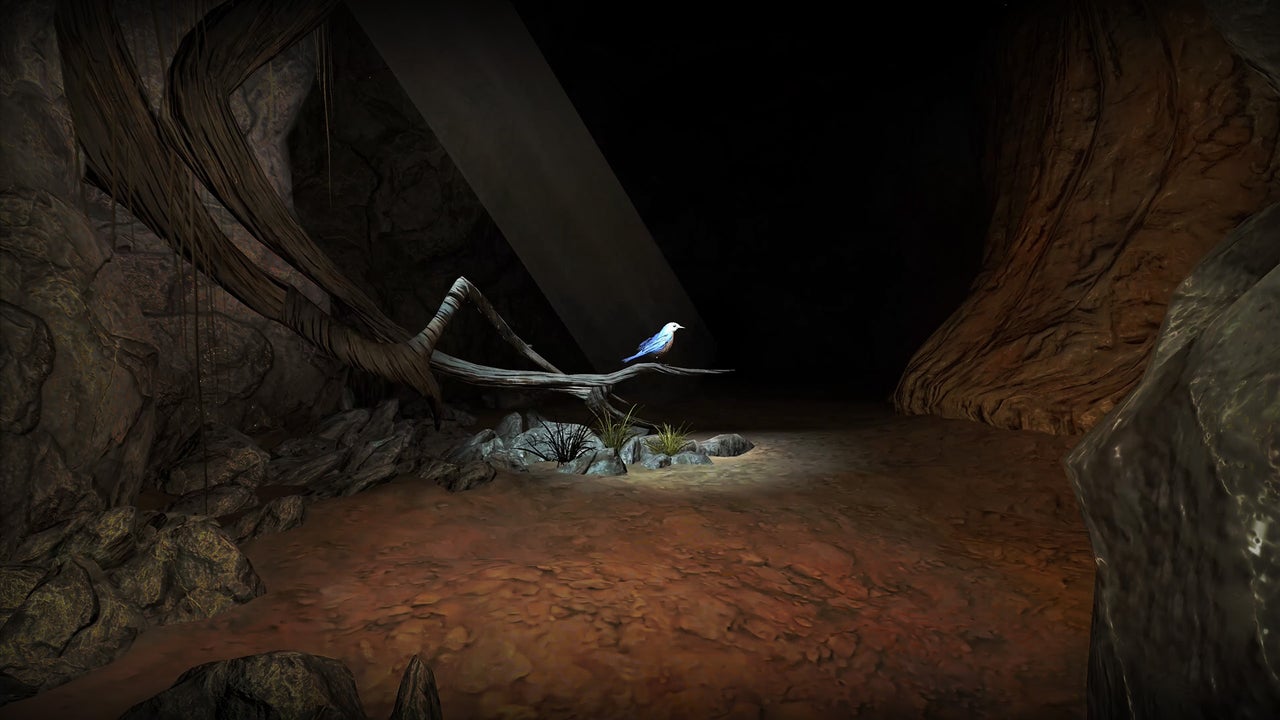 If you’ve followed me for a long (VERY LONG) time, you probably know that the great-granddaddy of text adventure games, the Colossal Cave Adventure, was quite an influence on me as a kid even when my first encounter with it wasn’t my own personal playthrough.
Well, it looks like legendary game developers Ken and Roberta Williams, pioneers of graphic adventure games, started playing with Unity during the pandemic, and pulled a team together to remake Colossal Cave in 3D. With VR support.
Yeah, naturally, I’m gonna be there. Even if it sucks, I’m going to check it out. Because… Colossal Cave. Ken and Roberta Williams. VR. That dragon had better be waiting for me on that frickin’ Persian rug.
It should be out this summer on Quest 2, PC, and Mac. Not sure if the PC version will have VR support yet, but it’d be a crime if they didn’t include SteamVR support.
Filed Under: Adventure Games - Comments: Comments are off for this article
A Virtual Visit to the Sword Art Online Museum
Posted by Rampant Coyote on March 3, 2022
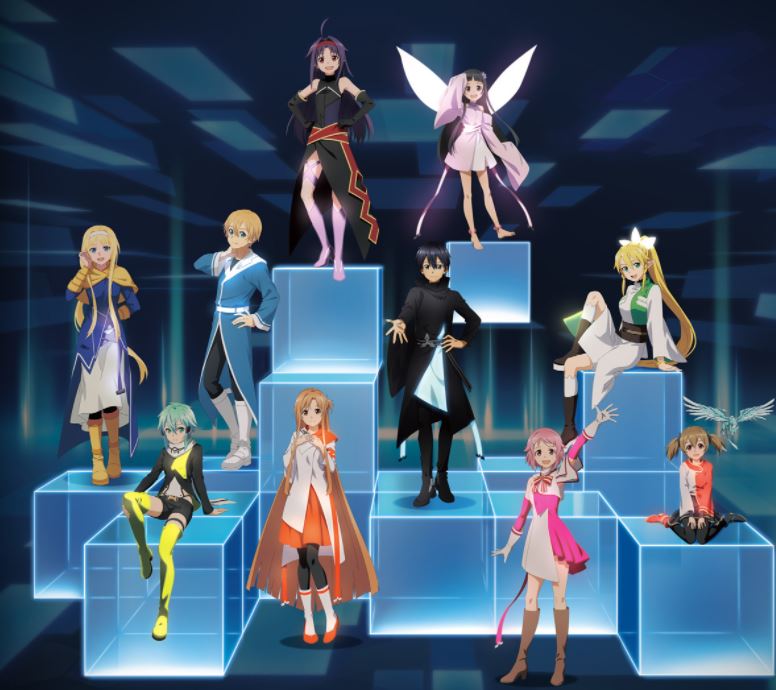 Sony has taken the museum experience for Sword Art Online (the anime / light novel / manga / video game / merchandizing phenomenon) and put it in… Virtual Reality. (Click the link if you are interested in participating.) It can be played with PC VR (using Steam), and it can also be visited using a phone app.
It’s about the closest thing we’ve had to an official massively multiplayer VR version of Sword Art Online. To which I say, “Well, about time!” I mean, I’ve played a couple of the SAO games. I thought Hollow Realization was pretty good. I like the anime. I’m pretty fond of the new Sword Art Online: Progressive novels. It’s all good stuff. So … being able to visit an online museum (open from February 22 through March 11) and participate in a couple of events sounded cool.
For those not familiar, Sword Art Online is a … let’s call it a franchise at this point… of novels, manga, anime, movies, games, etc. about virtual reality. The original storyline was about a “full dive” VR game where the lead designer / producer hijacked the system to fry the players’ brains if they died in the game, or if anyone tried to remove their headset from the outside world. The only way to escape was to beat the game, by clearing all 100 floors of a gargantuan dungeon / world. Naturally, as VR has become a consumer thing, players have wanted to see this world become a true VR Massively Multiplayer Game.
So instead, we get this. I went ahead and paid for a membership, because … hey visiting a VR Museum exhibit is one of those things I always wanted to try (and we have a few experiences in VR kinda like that, which I have enjoyed). And, like I said, it’s the closest thing we’ve got to an official SAO MMO. You can go in and interact with other patrons (there are usually about 2-6 others when I have logged in late at night). There is a “free” option for anyone to visit, and some exhibit areas restricted to paying members.
So what does the “free” visit get you? With just a free download, you have a chance to wander around a VR version of the Town of Beginnings and talk with other VR tourists. Oh, and you can get a group together to take on the Skull Reaper, the deadly boss of the 75th floor that was pretty much the ultimate real battle in the Aincrad story. More on that in a second.
 The Town of Beginnings is really just the central / arrival area. It’s not a “perfect” version of the entry plaza. More of a touristy representation of it. There are ads and posters and places where Yui will appear in fairy form to provide some audio commentary or instructions. On Saturday there’s supposed to be a live visit from ReoNa, one of the vocalists who have done the opening and ending themes for the show.
One of the big features of the Town of Beginnings is a giant wall that lists the names of players who have won the boss battle. Yeah, that’s my name up there. I eventually got my name on there twice. The boss battle is a pretty simplistic version of the battle against the Skull Reaper on level 75. As in the anime, you have your group join up in the dungeon in front of the hall to the boss room. There are some weapons provided in the hall so that nobody needs to accidentally go in unarmed. There are also some target areas in the dungeon hall to practice on while you are waiting. Once everyone is ready, you can go into the boss room. The boss is triggered by entering a blue circle in the middle of the floor. When that happens, the exit seals shut, preventing anyone else from entering the fight. The Reaper kills a couple of NPCs (really just unmoving dummies), and then runs around the room trying to kill everyone. Amusingly, guns are allowed, as Gun Gale Online was part of the SAO series.
 The boss fight itself isn’t anything particularly impressive. As a game, it’s … a fun museum exhibit. But it IS a multiplayer boss fight, unless you insist on trying to solo thing thing.
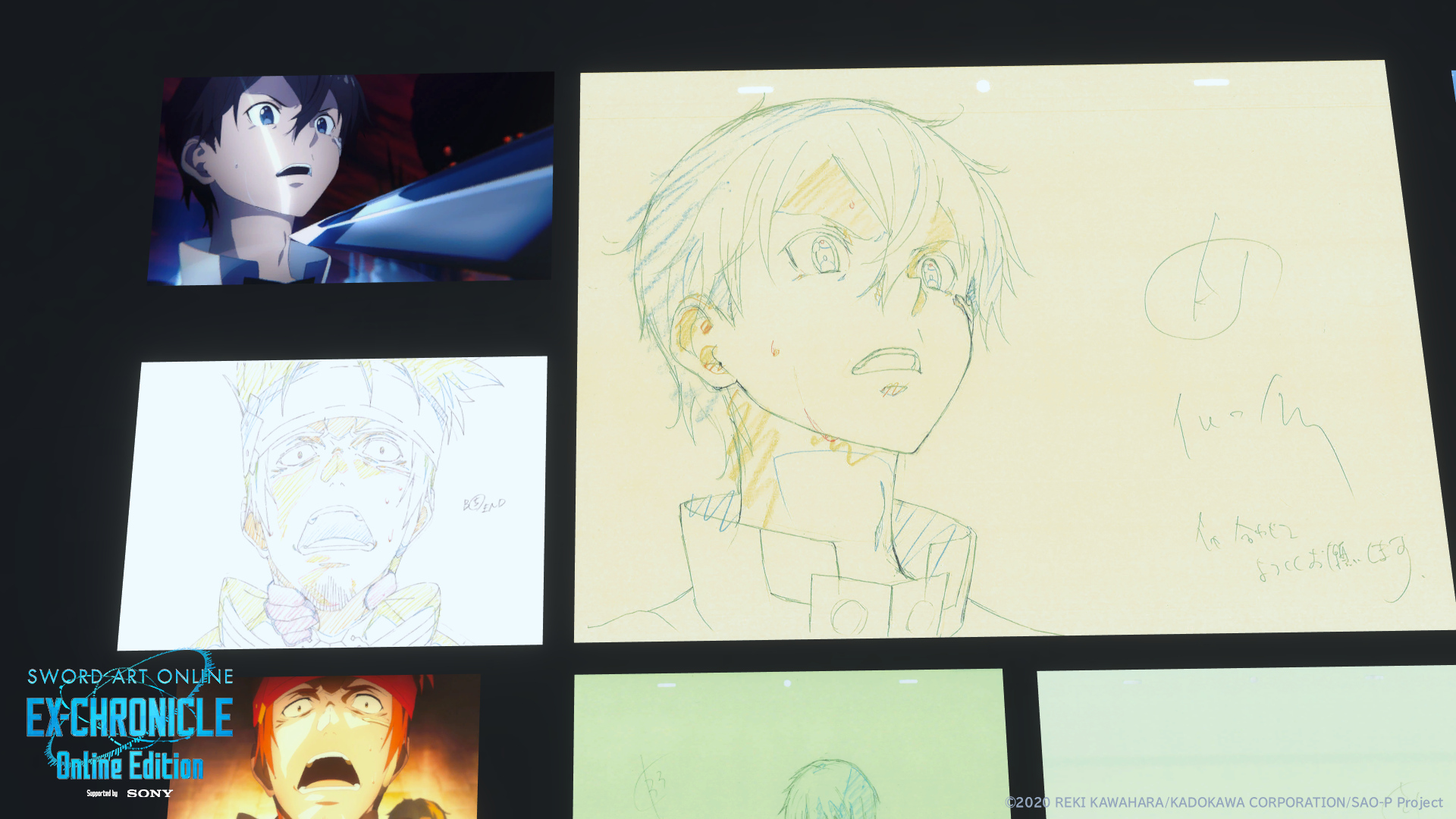
A paid ticket allows access to the exhibit halls. These I believe are VR recreations of the exhibits from the “live” exhibit in Tokyo in 2019, except with the luxury of VR the halls are a bit more fanciful and contain a number of interactive elements you can play with. For example, you can grab most of the weapons from their display and play with them (and even … *ahem*… cart them with you and use them in your fight against the Skull Reaper…) There are lots of stills and storyboard illustrations from the anime, as well as notes about the storyline and insights from the author.
There are some secrets, like hidden or hard-to-get-to treasure chests with clues (for what? I don’t know yet), and things like targets you can shoot at with one of the guns from the displays.
 The VR game provides you with a built-in camera, complete with a selfie mode. That’s pretty convenient. If you tie your account in with your twitter account, you can even automatically tweet out your photos. Yeah, I didn’t do that. Your avatar is basically an androgynous figure in a poncho. Free visitors only get the default poncho and lettering color. Ticket-holders get more. You can change your avatar (and nickname) every time you visit.
There are some bugs in the software. As a limited-time release, I wouldn’t count on any but the most serious ones being fixed. I am sure that phone app users won’t enjoy the interactivity that VR players can enjoy, but at least they can visit the exhibits as well.
So… was it worth it?
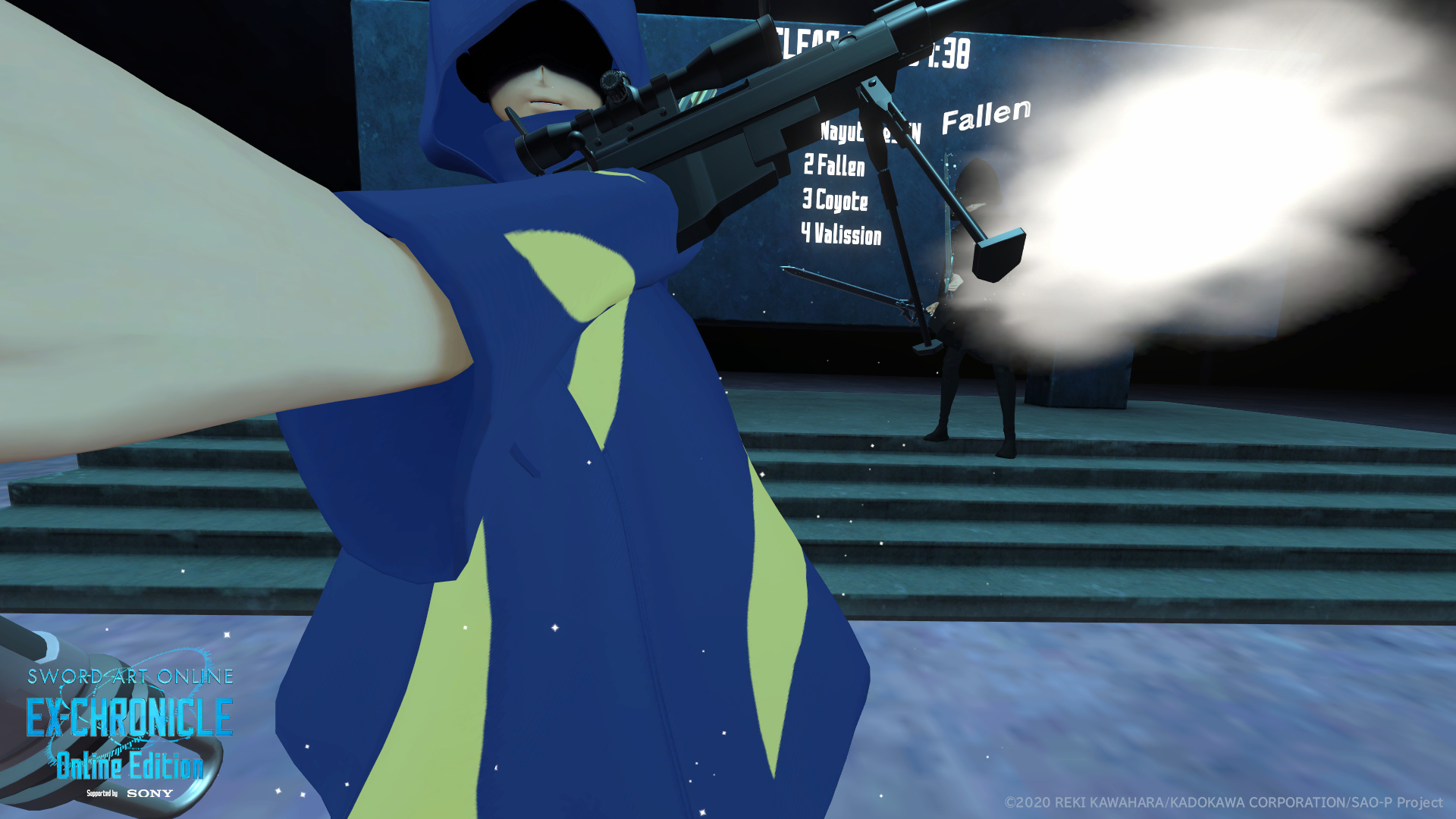 If you are not an SAO fan, probably not. It’s a niche exhibit. As I said, it is the closest thing we’re likely to see to a massively multiplayer VR SAO game for a while (amusingly, in the fiction the game launches this November). I enjoyed the exhibits as a paid ticket-holder, but if it’s a choice between that or a $30 VR game… a real VR game without a two-week expiration window would probably win out. It was fun reading the author’s comments, especially as he seems pretty self-deprecating and surprisingly candid about the weaknesses of the stories he wrote. Anyway, in the end, I have enjoyed the experience (and I may return over the next few days until the exhibit ends), but I’d not say it’s a “must-see” even for SAO fans. I think you’ll know if this is the kind of thing for you.
And while this is not a true substitute for the real thing in person, I can see “virtual reality museums” being a thing in the future. In some respects, SAO was perfect for this as an animated world without real-world artifacts to put on display. It’s a virtual museum for a virtual world, which means the VR version of the exhibit may even be the superior version. Intriguing, huh?

Filed Under: Events - Comments: Comments are off for this article
Zenith MMO – the VR MMO to beat (for now)?
Posted by Rampant Coyote on February 3, 2022
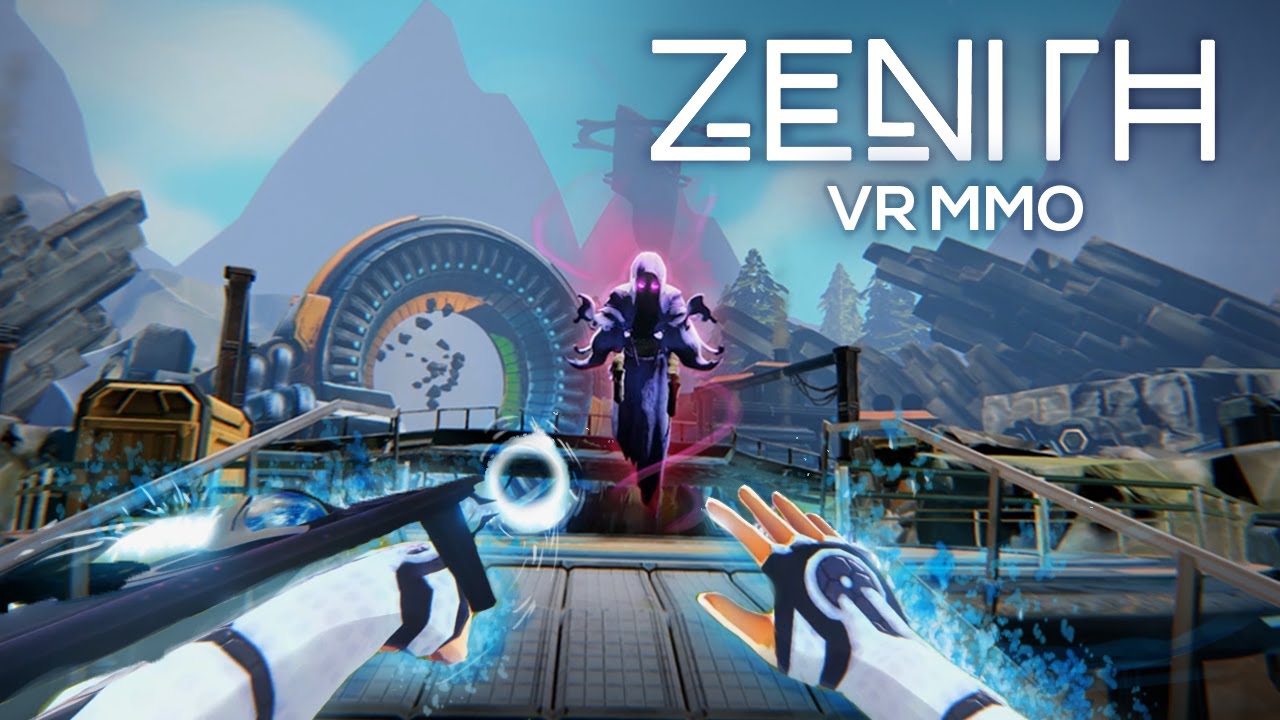
We’ve had a couple of VR MMOs (Orbus VR, A Township Tale) and a bunch of demos so far. But the next contender has come out swinging, and it’s pretty impressive.
Zenith MMO is a made-for-VR MMO RPG, with a bit of a science fiction / science fantasy environment, and strong anime roots. It’s still in Early Access, but the demand took it to the top of the Steam Charts on its EA launch–and it’s still high up on the list. Released for SteamVR, Quest 2 (I still think of it as Oculus…), and Playstation VR, it’s one I’ve been looking forward to for a while.
I can’t say I’ve been able to put much time into it so far, but I’ve had fun beating up on monsters and talking to people. The world has a more interesting style to me than OrbusVR. Right now there are only two classes (a third one is planned), but each class has one of three roles you can select (and change). There are things like recurring events that you can participate in with others even if you aren’t in a group. I’m still in the fun honeymoon stage where it feels like the world is ginormous and I’ll never run out of things to do. We’ll see how long that lasts, but so far I’m having a good time.
One issue I ran into is that there is no snap-turn function built into the Vive wands. Yes, I still use my original (1.0) Vive wands even though my headset is an awesome Pimax 8KX. Fortunately, some players have done some control maps you can download for the game directly from the SteamVR device settings menu that solves this problem. Once I had that enabled, I was much, much happier.
Then there’s some of the launch clunkiness, especially the first night. Server lag was an issue. Many of the tons of servers were full, so it’s actually a credit to the popularity of the game that we were having these kinds of issues, yet they were not game-breaking for me.
I ran into a loot situation with another player after we both killed a mob, and discovered that the loot was client-based, so we were both able to enjoy the spoils. 🙂 And that seems to be an effect on the player base, at least in the newbie areas. People have been politely friendly. Maybe it’s because I’m old-school, but it’s still a weird thing to walk around the town or battlefield and overhear conversations between real players. I’m sure I’ll get over it eventually. If I actually bothered to play VRChat, I’m sure I’d be over it in no time.
Gameplay-wise… I haven’t seen anything really special or unique, other than the mere fact that HOLY CRAP I’M PLAYING AN MMORPG IN VR! If it were a pancake game, I don’t know that there’d be much to write home about. But the VR aspect changes everything. As with other VR games, you don’t get to do most things through the abstraction of button mashing. You have to do it. Wave your hand a particular way to cast a spell. Bend down and pick up the plant. Physically dodge the incoming attacks. Remembering all this in the flurry of VR can be a little overwhelming at times, but it really just takes time and practice.
All this week, I’ve heard Streamers doing their thing in the newbie areas. It’s content, right? Maybe it was my imagination, but it sounded like they were treating this launch as a major event for VR. And you know, maybe it is. Many in the VR community have a soft place in their heart for Sword Art Online, and are not-so-patiently awaiting their chance to visit Aincrad. Hopefully without, you know, the threat of DEATH. Zenith MMO may be as close as we’ll get for a while, and I’m okay with that. I still have high hopes for Ilysia VR, which is hopefully launching later this year. I think there’s enough room to enjoy both, and I hope they are both wildly successful. Either way, I think Zenith MMO has set a new high water mark for VR MMOs, and I can’t wait to find out what happens next.
Filed Under: Computer RPGs - Comments: Comments are off for this article
New author website – jaybarnson.com
Posted by Rampant Coyote on January 26, 2022
Yes, things have been quiet here. Due to hosting issues, and the fact that the writing thing has been taking off, and the day-job shifted into overdrive a while back that was nearly as bad as the games industry. We won’t speak of what’s been going on with 2020 and 2021. With all that, my own indie game development efforts have ground down to tinkering levels – mostly with Virtual Reality. While I’m online quite a bit, a lot of time has been spent on social media… which is where the people are, but it’s also somebody else’s place.
I’m not planning on retiring this site or anything at this point–if anything, I want to give it a little more attention. I’m not as actively focused on indie gaming or indie game development, so I have less to say, but I’m still gaming and indie games are still where it’s at. “Indie” has become a lot more complicated of a term now than when I started, that’s for sure. And that’s probably a good thing. We started as the scrappy underdogs, and now… well, we’re still the underdogs, but there’s a gazillion of us.
Anyway, for those still paying attention: Hi, sorry for the unannounced hiatus.
If you are interested in the writing side of things… well, I’ve got five books out (four novels and an anthology), and a whole mess of short stories, with much more coming. You can learn more over at jaybarnson.com.
Rock on!
Filed Under: Rampant Games - Comments: 2 Comments to Read
A Mighty Fortress – An Anthology of Mormon Steampunk Volume 4
Posted by Rampant Coyote on February 7, 2020
Hey, more Steampunk! I’ve got a story in the fourth “Mormon Steampunk” anthology, A Mighty Fortress, which releases on February 18th and is available for pre-order now. We’ve got some short video trailers for some of the stories. This one is for my story, “The Tunnel.”
The Tunnel is loosely inspired by a legend circulating around Britain and parts of Europe from the late 1800s (but surviving until at least the middle of the 20th century) about the “Mormons” having build a tunnel from England to Salt Lake City – terminating beneath the Salt Lake Temple. The rumor stated the Mormons were abducting women through the tunnel. My story involves an investigative journalist named Eloise White who makes an effort to investigate this story, as crazy as it sounds, when women in London turn up missing.
I also have a story in the first volume of the series, “All Made of Hinges.”
What is “Mormon Steampunk?” Well, the call for submissions explained, “The story must be in some sense ‘Mormon’ and in some sense ‘Steampunk.’ We’ll try to interpret those categories both broadly. If your story is faith-promoting (Mormonism is ‘true’ in the story), we’ll stop reading it. If it is mean-spirited (Mormons are all idiots), we’ll also stop reading it.” The stories so far have ranged from steampunk retellings of historical events to off-the-wall to epic clockwork-and-steam apocalyptic battles, and everything in-between. Fun stuff!
Filed Under: Short Fiction, steampunk - Comments: 3 Comments to Read
RIP Neil Peart
Posted by Rampant Coyote on January 13, 2020
I didn’t think it was possible to feel the kind of grief I did from the death of a man I never met, but Friday’s news hit me kinda hard. Neil Peart, drummer and primary lyricist for my favorite band, Rush, died of brain cancer. Rush was effectively retired… we expected that when we attended their R40 concert in Salt Lake City, and it felt very much like a swan song. But this was the death of someone whose work I had admired since Junior High. It marked the true end of Rush, and the loss of one of the greatest poets and musical virtuosos in Rock.
Not that I agreed with everything he suggested in his songs. Far from it. I don’t think he did, either… his viewpoint seemed to evolve over time, as it should. But his lyrics were always thought-provoking and imaginative. He, with his bandmates’ approval, eschewed the marketable, unrealistic love songs. This move was epitomized in their breakout album 2112, where they were pushed by the studio as their “final chance” in the business to make something more mainstream and marketable. They decided to use their last chance to do the opposite, and create an anthem about musical creative rebellion in a world of soul-crushing totalitarian control over everything, including music: “We’ve taken care of everything: the words you hear, the songs you sing, the pictures that give pleasure to your eye…”
Against all odds, the album did well, and put them on a trajectory that spanned over forty years. Their music has inspired me most of my life. Their final studio album, Clockwork Angels, revisited the theme of Hemispheres, but with more maturity in perspective and even greater musical virtuosity, and of course cool steampunk trappings. And it proved to be one of their most popular albums. A great one to go out on.
Anyway, this all hit me harder than I thought. Maybe part of it is a confrontation with my own mortality, because I ain’t getting any younger, either. But it was a sad day for me, and for many. I don’t think he believed in an afterlife, but I hope that today he has rejoined his family who passed before him, is looking down on the family he left behind, and is waxing lyrical about his new insights.
Filed Under: Music - Comments: Comments are off for this article
Copyright © 2026 Rampant Games | Privacy Policy
Powered by WordPress.
